
SA History Through Music Legends and Photojournalism
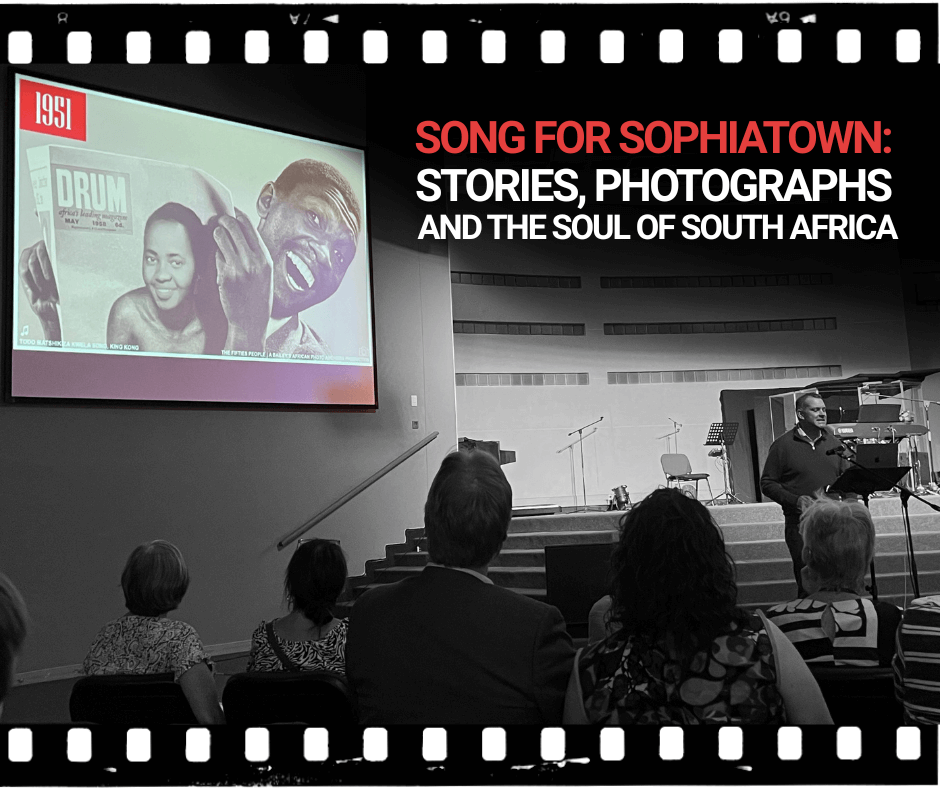
Last week Michael Charton, through his storytelling, carried me across decades of South African history, guided by the music and lives of extraordinary African legends. He has a rare gift. He investigates history with diligence and then weaves it into a narrative so compelling that you feel as though you are living it.
His presentation, Song for Sophiatown: South Africa in the Fifties and Sixties Through the Lens of Popular Culture, traces the dramatic arc of a nation pulled between oppression and resistance. It reveals how music, journalism, photography and the arts became powerful tools in the fight for dignity and freedom.
The YES Trust
This was the fourth time I have heard Michael speak, each visit made possible through the invitation of the YES Trust, and each time I leave with a deeper understanding of our shared history.
The evening opened with a brief reflection from a medical student supported by the YES Trust. He spoke about receiving far more than financial assistance. Through mentorship, practical support and genuine care, he has been helped to navigate his studies, prepare for an overseas internship and believe in his own future. Listening to him, I felt grateful for the people who invest in young South Africans in such meaningful ways. KZN Women in Business, where I have been a member for over 17 years, has chosen the YES Trust as its charity of the year, and I am thankful they introduced me to Michael and brought his work to Durban.
![Benni Thompson [KZN WIB Chairperson], Fiona Furniss [YES Trust], Michael Charlten and Natasha Lee](https://www.nanuja.co.za/wp-content/uploads/2026/02/2026-02-18-18.31.04-1-scaled.jpg "Benni Thompson (KZN WIB Chairperson), Fiona Furness (YES Trust), Michael Charlton, Natasha Lee")
Our History through Music
Michael’s presentation then carried us back through time. He traced the story of South Africa from around 1935 onward, connecting the lives and music of giants such as Miriam Makeba, Hugh Masekela, Jonas Gwangwa and Phuzekhemisi, among many others. I was fascinated to discover how interconnected these artists were across years, continents and movements.
As their stories unfolded, I realised I still have many of their CDs, treasured albums of uniquely African sound that I listened to and loved throughout the 1990s. Hearing their music again within its historical context gave it new depth and meaning.
He drew threads between South Africa and the global civil rights struggle, linking figures like Martin Luther King Jr. to Makeba’s life in exile during the height of the movement in the United States. Makeba was engaged to and later married Stokely Carmichael, the Trinidadian-American civil rights activist and Black Power leader.
Their union proved highly controversial in the United States, leading to cancelled performances, withdrawn recording contracts, intense FBI surveillance and a sharp decline in her career opportunities. The pressure ultimately forced the couple to relocate to Guinea, where Makeba continued her life in exile and her role as a global voice against apartheid. From abroad, her music became both cultural expression and political testimony, carrying the story of South Africa to the world.
The Power of Photos
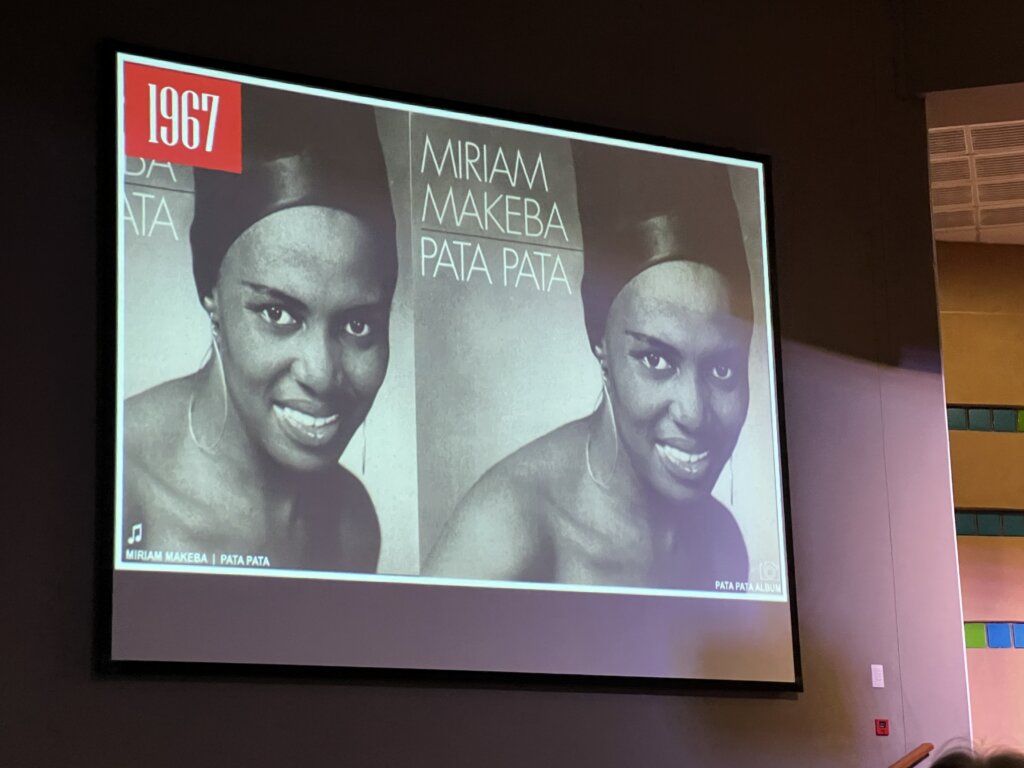
But what made the experience even more powerful was the visual backdrop. The entire presentation unfolded against a tapestry of historical photographs, images gathered from newspapers, archives and personal collections. These photographs did not simply illustrate the story. They deepened it, grounding the narrative in real faces, real moments and lived experience. The destruction of Sophiatown and the forced removals of its diverse community formed a haunting visual thread, a reminder of what was lost and what was resilient enough to endure.
Pioneer of SA Photojournalism
One of the most compelling figures we learned about was Henry Nxumalo, known as “Mr Drum,” an investigative journalist whose work helped define Drum magazine. As one of the first Black journalists working under apartheid, he pioneered undercover investigative reporting, exposing brutal labour practices and prison conditions at great personal risk.
In 1957, while investigating suspicious deaths linked to an illegal abortion clinic in Sophiatown, he was murdered while walking home. No one was ever convicted. Though his life was cut tragically short, his courageous journalism, paired with powerful photojournalism, helped the world see truths that the apartheid system sought to hide.
Following his journey alongside the photographers and writers of Drum revealed how images and words worked together to document reality when truth itself was under threat. These photographs did more than record events. They bore witness, preserved dignity and ensured that stories could not be erased.
Michael’s narrative also revealed how, as political hope was increasingly suppressed in the late 1940s and 1950s, a cultural renaissance emerged, expressed most powerfully through music, journalism, theatre and the visual arts, fighting for hearts and minds when laws sought to silence voices.
Holding onto Hope
We sat through the first 55 minutes in what felt like five. After the interval, another 45 minutes passed just as quickly. Michael keeps you on the edge of your seat, offering new insight into events from South Africa’s painful past while revealing the resilience and humanity woven through it.
His storytelling invites reflection on the difficulty of our history, on the dignity and generosity of those who suffered, and on the remarkable capacity to forgive without forgetting. Even in moments when I feel frustrated with the current state of South Africa, evenings like this remind me how many people fought, sacrificed and endured to shape the freedoms we live with today.
My calling
For me personally, the evening resonated on another level. As a photo manager and someone deeply passionate about uncovering family histories, stories and legacy, I was struck by how powerfully photographs carry truth across generations. The right image does more than document. It restores memory, honours lives and anchors stories in reality. Michael’s masterful use of photographs showed how thoughtfully curated imagery can elevate storytelling and deepen historical understanding.
Honestly, I believe every South African should hear these stories. They deepen our understanding of one another and remind us of the many journeys that brought us to this shared present. If you have the opportunity, I highly recommend attending one of Michael Charton’s presentations visit www.InheritSouthAfrica.com for more details.
My Belief
Because when photographs and stories survive, memory survives, and with it the legacy of those who ensured the truth would never be forgotten.